
2. Current and emerging uses of AI in courts and tribunals
Overview
•This chapter discusses current and anticipated uses of AI in Victoria’s courts and the Victorian Civil and Administrative Tribunal (VCAT).
•The use of AI in Victoria’s courts and VCAT is at an early stage of development but is increasing.
•AI is being used in Victoria’s courts and VCAT in different ways by different groups. This chapter discusses current uses, pilots and opportunities for future uses of AI at different stages of court proceedings. In Chapter 3 we discuss the risks and benefits of AI which can be used to consider possible uses for courts and tribunals.
•Our work has been shaped by what we know about how AI is being used in society and by courts and tribunals in other jurisdictions. The experiences of other jurisdictions are useful to identify future opportunities for Victoria’s courts and VCAT.
•In addition, this chapter discusses how the Coroners Court has piloted AI approaches.
AI in Victoria’s courts and VCAT
2.1There are significant opportunities to use AI across Victoria’s courts and VCAT. The use of AI in Victoria’s courts and VCAT is currently at an early stage and very limited. However, AI technology is rapidly developing and its application in courts and tribunals will evolve as the technology advances.
2.2Different AI tools can be applied at different court and tribunal stages and by different people. AI might be used in administrative processes, to support court staff and their work. AI might also be used by litigants or lawyers to conduct research or prepare documents for courts and tribunals. Other uses of AI in the courtroom include translation and transcription. AI could also support judicial officers by producing chronologies or to summarise large bodies of text.
2.3The use of AI is generally at a preliminary stage, particularly for courts. AI is not being used for judicial decision-making in Victoria. However, its use across the legal sector is increasing.
2.4The 2025 Victorian Legal Services Board and Commissioner (VLSB+C) Lawyer Census provided valuable insights on the use of AI.[1] It found that over a third (36.7 per cent) of Victorian lawyers surveyed are using AI in their practice.[2] Actual use is likely higher as some lawyers may be unaware that they are using AI. This is because AI is increasingly being embedded into common tools such as Google Search.[3] Relevantly, the census found that:
•among users, over half reported using AI regularly—weekly (35. 1 per cent) or daily (25.2 per cent)
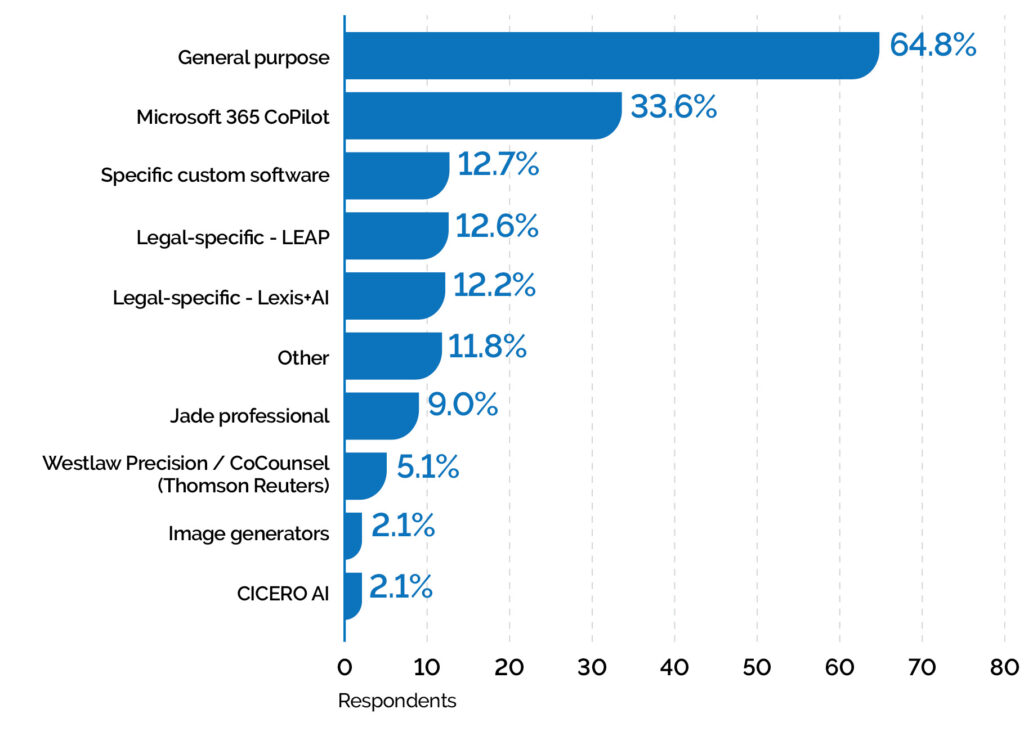
•public AI tools (like Claude) are used more frequently than specialised legal specific tools (like Lexis+ AI)
•AI is used in ways that may interact with Victoria’s courts and VCAT, such as in legal research and drafting court documents.[4]
2.5Some of the key findings from the VLSB+C Lawyer Census relating to AI usage are illustrated in Figures 1 and 2.
Figure 1: How are Victorian lawyers using AI?[5]
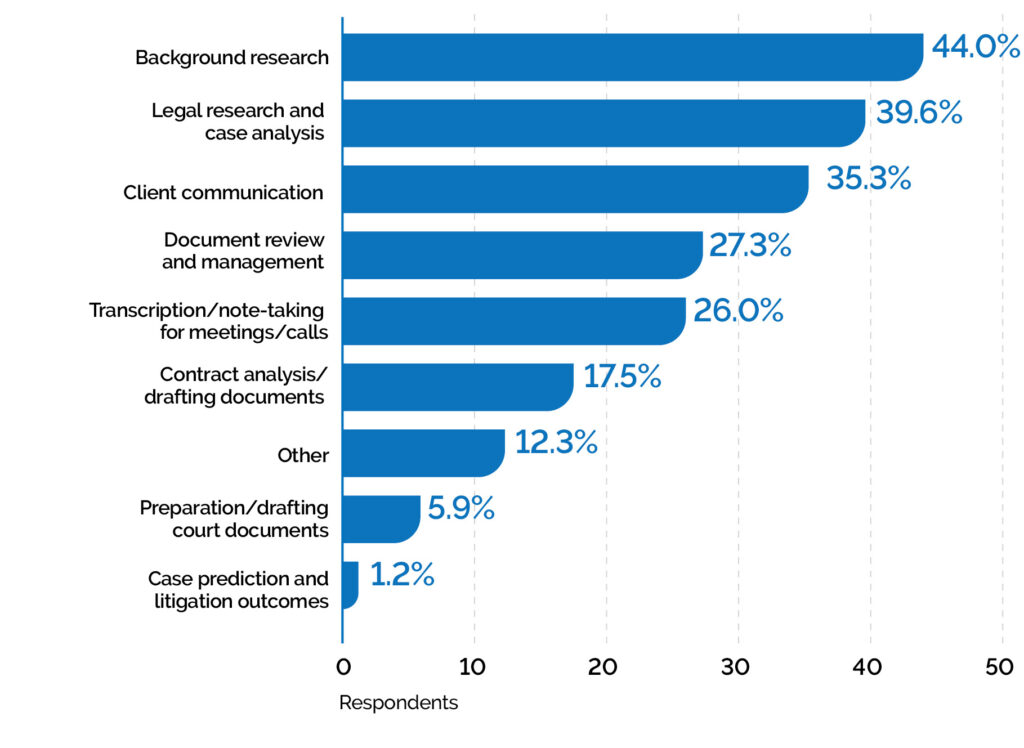
Figure 2: AI products Victorian lawyers are using AI [6]
2.6In our consultation paper, we identified a range of AI tools used or developed for use in courts and tribunals internationally. Since then, the European Commission for the Efficiency of Justice has identified a trend of increasing use and distribution of AI tools for a range of justice purposes.[7] Internationally, 160 AI tools have been identified as being used in courts and tribunals.[8]
2.7A report by the International Bar Association demonstrates the many ways AI is being used for legal services across 35 international jurisdictions.[9] AI has been used by lawyers around the world for knowledge management, research, legal advice, contract analysis, predicting decision outcomes, transcription and translation.[10]
2.8From our consultations we heard that AI is being used or considered by Victoria’s courts and VCAT, government departments and agencies, private law firms, community organisations and individuals. In this chapter we discuss what we heard about current and potential uses of AI in Victoria’s courts and tribunals. Different types and uses of AI will raise different risks and opportunities, which we discuss next in Chapter 3.
Potential range of AI use in Victoria’s courts and VCAT
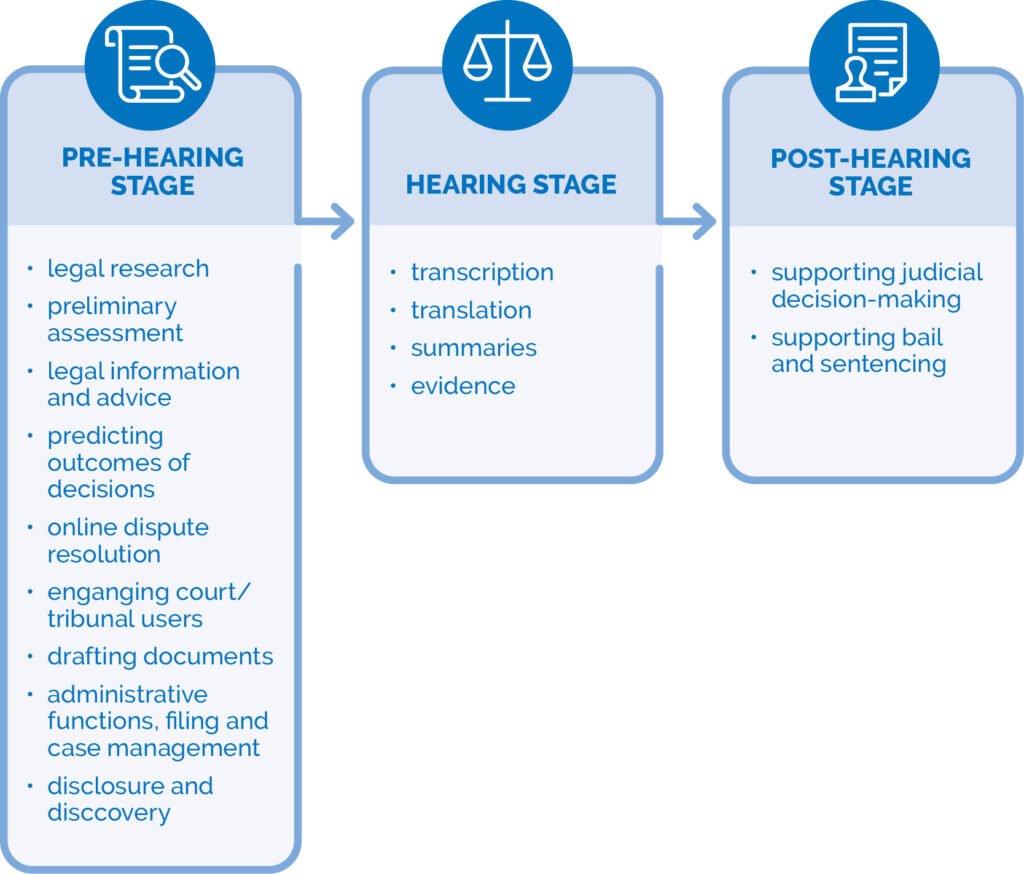
2.9To explain the different ways AI may be used in Victoria’s courts and VCAT, we have separated this chapter into three hearing stages: pre-hearing, hearing and post-hearing. This is outlined in Figure 3. This structure is for illustrative purposes—not all legal matters will follow this pathway. For example, most civil matters settle before a court or tribunal hearing and matters may move back and forth between stages or jurisdictions.
2.10AI will interact with the justice system in many ways. Examples of how AI is being piloted in the Coroners Court is also considered in this chapter to explain how AI may be used outside adversarial court processes.
Figure 3: Potential use of AI based on hearing stage
Pre-hearing stage
Legal information, preliminary assessment and advice
2.11Before coming to a court or tribunal, people will often seek legal advice and information. Many will resolve a dispute before commencing a court action. Legal advice can assist people to understand their legal obligations or rights, prepare for negotiation or mediation or identify legal issues for dispute. People can also seek advice on the likely success or outcome of their matter.[11]
2.12Increasingly, people may use AI to conduct legal research or to seek legal information or advice. Similarly, lawyers may use AI to conduct their own research or to assist in the intake of new clients. A developing area is the use of AI to provide legal advice through virtual platforms and interactive chatbots that have incorporated natural language processing technology.[12]
Legal research
2.13We consulted with a range of Victorian lawyers. For example, we spoke to members of the Law Institute of Victoria, the Victorian Bar Association, the Federation of Community Legal Centres, Victoria Legal Aid, the Office of Public Prosecutions (OPP) and Law Firms Australia. From these discussions it was apparent that there is widespread use of AI for legal research to identify and summarise case law and legislation.
2.14We heard that AI is used for legal research by lawyers across private firms of all sizes, individual practitioners and community lawyers. This includes a mixture of General Purpose AI tools and specialised AI tools designed for specific legal purposes.[13]
2.15The VLSB+C census indicates that the most common application of AI tools by Victorian lawyers is for legal research and case analysis.[14] The census found that of lawyers using AI:
•44 per cent were using AI for background research (for example on relevant non-legal issues)
•39.6 per cent were using AI for legal research and case analysis.[15]
2.16We heard that AI is increasingly being incorporated as an advanced functionality into existing legal research platforms, such as LexisNexis’ Lexis+ AI and Thompson Reuters’ CoCounsel.[16]
2.17However, the VLSB+C census found that there are higher rates of lawyers using General Purpose AI tools like ChatGPT and Claude, in comparison to specialised legal tools like LexisNexis+ AI.[17]
2.18Victoria’s courts and tribunals are considering the use of AI for legal research. The Law Library of Victoria is trialling LexisNexis’ and Westlaw’s AI products to evaluate their potential future use for Victoria’s courts and tribunal staff and the judiciary.[18]
2.19We heard that there may be opportunities for AI to support and enhance publicly available legal databases. For example, the Supreme Court noted that the Australian Legal Information Institute (AustLII) already uses AI in natural language search and citation analysis in its ‘Note Up’ function.[19] Chief Justice Bell recently commented that:
With proper support from government and the profession, Austlii’s pathbreaking democratising work in facilitating access to justice may be enhanced by the curation and responsible use of artificial intelligence in the years ahead.[20]
2.20Internationally, AI has been used to support public access to legal databases. For example, in Singapore Pair Search is a public tool that uses a large language model to enable users to access, search and analyse government records, legislation and Singapore Supreme Court cases.[21]
Preliminary assessment
2.21AI can be used to support the preliminary assessment of legal claims. We heard how AI was being used to improve the delivery of services by Justice Connect, an organisation that connects pro bono contributions of lawyers to those seeking legal assistance.[22] Justice Connect has implemented AI technology by building a:
language processor to help overcome barriers between people seeking legal help and legal help providers in Australia. Our AI Project was developed based on research that when people search for legal help online, they often struggle to correctly articulate their legal problem.[23]
2.22This project demonstrates how natural language processing tools can be used to make it easier to connect people with legal help.[24] AI can assist in reducing administrative intake processes, which could allow lawyers to ‘focus on more complex legal matters and in relationship with clients’.[25]
2.23The Federation of Community Legal Centres and Justice Connect identified that in future, AI tools could ‘provide preliminary legal assessments, equipping legal professionals with better insights to offer more informed guidance to clients’.[26] It was highlighted that access to justice benefits may result from the development of legal assistance tools:
AI-powered chatbots and self-help tools improve public access to the justice system by offering guidance and support to individuals navigating court processes, making legal assistance more accessible to many of those who need it.[27]
Legal information and advice
2.24We heard limited examples where AI is used to give preliminary legal information to people seeking legal assistance in Victoria.
2.25Some private law firms have incorporated AI tools in the form of interactive chatbots on their websites. The criminal law firm Doogue + George has developed an AI chatbot which enables people to ask general legal questions. The tool contains a disclaimer that it is not giving legal advice but it can provide general legal information.[28] For example, a person could ask what penalty may apply to a drink driving offence.[29] The response provided is generic information that does not consider the individual circumstances of the person.
2.26Tools offering generic legal information were seen to offer efficiency benefits. We heard that such tools could remove ‘the 20 minutes spent explaining generic information in a client interview and allows the lawyer to focus on the particulars of their issue’.[30]
2.27In New South Wales, the National Justice Project has developed Hear Me Out, an AI-powered chatbot that provides recommendations to people by identifying the appropriate complaint body and preparing and lodging complaints.[31] Hear Me Out is available directly to the public as well as to legal aid organisations and other non-legal community services. It uses a large language model to provide accessible plain English advice on where and how to file complaints.[32] The National Justice Project plans to expand the tool to operate in other jurisdictions.[33]
2.28Internationally, there are examples of AI tools directly providing legal advice to potential court users. In England and Wales, the Solicitors Regulation Authority recently approved Garfield Law, which is described as ‘the first purely AI-based firm’ to provide regulated legal services.[34] Garfield states that users will be able to directly upload documents to its platform. The AI system can then create ‘letters before action, draft the Claim Form and Particulars of Claim, to apply for default judgment, handle settlement negotiation and prepare for trial’.[35]
2.29Internationally, there are reports that self-represented litigants are increasingly turning to public GenAI tools like ChatGPT and Google Gemini for ‘situation-specific legal guidance’ and help with court documents.[36]
2.30If, in future, AI tools are used in Victoria to provide legal advice this will likely raise issues of unlawful and unqualified legal practice. An entity providing unqualified legal practice is an offence in Victoria.[37] Lawyers must hold a valid practicing certificate to be licenced to engage in legal practice. AI tools cannot hold a practicing certificate.[38] In future, the first issue for consideration will be whether an AI tool purporting to give legal advice is allowed to operate in Victoria. And, if so, what recourse there will be for a person who relies on that legal advice if it turns out to be wrong.[39] We discuss this further in Chapter 5.
Predicting outcomes of decisions
2.31Predictive analytics tools that rely on machine learning algorithms can be used to make predictions about the likely outcome of cases. As discussed in our consultation paper, predictive analytics can be applied to predict potential case outcomes and can also be applied to predict specific outcomes related to a particular judge. This is commonly referred to as ‘judicial analytics’. Predictive analytics tools could be used to help potential court users determine whether to proceed with a matter.[40]
2.32In our consultations, using AI to predict outcomes of decisions was not raised as a common use of AI. Similarly, the VLSB+C census found that only 1.2 per cent of AI use by Victorian lawyers was directed at case prediction and litigation outcomes.[41]
2.33Predictive analytics are being applied more broadly internationally. For example, in the Netherlands the Dutch Public Prosecution Service is using LexIQ’s Case Law Engine to support prosecutors by providing an ‘indication of the possible outcomes of a case in court’.[42]
Online dispute resolution
2.34Online dispute resolution is a broad term that has been increasingly used to describe when dispute resolution takes place online and makes use of information communication technology tools.[43]
2.35Professor Vicki Waye and others outlined common dispute resolution stages and how technology may interact with each of those stages as follows:
1)Information gathering: Technology helps the parties gather general information about their legal rights and responsibilities, and how these may be enforced. This information is largely generic and of general application.
2)Obtaining advice: Technology helps provide the parties with legal advice that is tailored to their specific situation and provides some guidance as to how they could or should proceed.
3)Direct negotiation: Technology helps the parties directly negotiate with each other in an attempt to reach a mutually tolerable settlement of the dispute.
4)Supported negotiation: Technology helps support the parties in their negotiation by a third party, who assists the parties to reach a mutually tolerable settlement of the dispute through a range of techniques, including framing, interest identification and articulation of ends.
5)Adjudication: Technology helps the parties and the third party (who has assumed control of the determination of the dispute, and delivers a final, binding and authoritative judgment that concludes the dispute) in advancing the adjudication.[44]
2.36AI-assisted online dispute resolution has been used in many ways. It can be used to resolve matters before they reach courts by:
•private companies, such as Amazon, e-Bay and PayPal, to resolve e-commerce disputes[45]
•government departments and agencies to facilitate a range of alternative dispute resolution options to traditional litigation (for example, Amica is an AI-assisted online dispute resolution system supported by the Australian government and legal aid agencies which helps separating couples reach a financial agreement outside of court).[46]
2.37Courts and tribunals can also use AI-assisted online dispute resolution. Internationally, some courts and tribunals have incorporated AI to support online dispute resolution. To date, AI has been used internationally to support parties to participate in online dispute resolution rather than AI being used to resolve disputes or produce final outcomes.
2.38For example, Singapore courts partnered with Harvey to develop a GenAI program for the Small Claims Tribunal to support people in filing and responding to small claims.[47] The program can support people by answering questions, translating documents and informing them how to proceed with their claim.[48] The system is focused on supporting tribunal users to engage in small claims processes. In future, it is intended that the system will be able to point parties to settlement options.[49] However, this functionality is not currently available. It is also hoped the system will soon be able to summarise materials.[50]
2.39Another example is British Columbia’s Civil Resolution Tribunal system. It has four phases:
a)A purpose-built expert system, Solution Explorer, asks parties questions to understand the legal claim, classify and narrow the matters in dispute and provide tailored legal information and appropriate forms.
b)An automated negotiation tool is used to support interparty communication and prepare draft agreements.
c)A facilitation phase is undertaken with an expert facilitator to help parties reach a consensual agreement.
d)If parties are still unable to reach agreement the matter proceeds to adjudication by a Tribunal Member.[51]
2.40To date, the Civil Resolution Tribunal system has only used AI in a supportive capacity and not to replace human decision making.[52]
2.41The Department of Justice in Hong Kong’s special administrative region has supported the development of the Electronic Business-Related Arbitration and Mediation Platform.[53] This system uses AI to enable parties ‘to use the platform for mediation, arbitration or deal-making negotiations’.[54]
2.42England and Wales are also implementing a range of digital justice initiatives such as online dispute resolution platforms. Master of the Rolls, the Rt. Hon. Sir Geoffrey Vos, envisions that in future:
AI will be used at every stage of the digital justice system: in giving ELSA (Early Legal Services and Advice) to diagnose the problem in simple cases, to enable everyone to be fully informed of every stage of the process that is being undertaken, to help people understand and interrogate complex sets of rules and instructions, and also, perhaps, to take simple decisions at different stages of the resolution process.[55]
2.43In July 2025, the UK Ministry of Justice announced that they are developing an AI chatbot to support people to resolve child arrangement disputes. It is planned that this chatbot will provide ‘guidance on alternative routes to dispute resolution which could support a reduction in unnecessary court applications’.[56]
2.44We did not identify any AI-assisted online dispute resolution tools being used by Victoria’s courts and VCAT. But some stakeholders identified that, in future, AI could be used by Victoria’s courts and tribunals to facilitate the resolution of disputes.[57] We heard that AI-assisted online dispute resolution could potentially be integrated by courts and tribunals to help resolve consumer disputes.[58] AI-assisted online dispute resolution systems may help people to resolve their disputes ‘as early as possible without costly legal representation and lengthy resolution process[es]’.[59]
2.45We heard that AI online dispute resolution may be best suited for straightforward disputes. The VLSB+C stated that AI could potentially be used to resolve ‘low-risk straightforward disputes (e.g. in residential tenancies, fencing, consumer law and some employment matters)’.[60] The lower-cost and timely resolution of issues may be well-suited to small civil claims, where the amount in dispute may not be proportionate to the legal costs.[61] Several stakeholders said AI-assisted online dispute resolution would be more appropriate for lower-level, less complex matters. For example, representatives from the OPP noted that:
there is more scope for using it in lower courts where the volume of matters is high and some decisions more binary, than using it in the Court of Appeal to review a sentence or whole trial.[62]
2.46The potential opportunity for AI-assisted online dispute resolution to resolve consumer disputes was explored by the Centre for Artificial Intelligence and Digital Ethics at the University of Melbourne which stated:
ODR can be integrated in some lesser form within existing judicial or extrajudicial consumer dispute resolution avenues, including in courts and tribunals, to help consumers with an initial understanding of their legal problems, to increase awareness of their substantive legal rights and obligations, and to empower them to present their matter in the best possible light and resolve their disputes as early as possible without costly legal representation and lengthy resolution process.[63]
2.47The benefits and risks of AI-assisted online dispute resolution are discussed in Chapter 3. Considerations for Victoria’s courts and VCAT in implementing AI-assisted online dispute resolution is also discussed in Chapter 8.
Starting a criminal or civil matter
Engaging court users
2.48In civil law, a plaintiff (the person bringing a case) can commence civil proceedings by filing a document with the court or tribunal.[64] These documents may be prepared by lawyers or by litigants themselves. AI may be used to improve the format, spelling or readability of these documents or to provide a draft (whether parts of, or the entire document).
2.49Proceedings for a serious (indictable) criminal offence can commence via a filing hearing, which is the first stage of the committal process. This generally occurs shortly after a criminal charge is laid.[65] At this hearing, the court sets a timetable ‘for the exchange of information between the prosecution and defence’.[66] At this stage prosecutorial bodies, lawyers and litigants could potentially use AI to analyse briefs of evidence, prepare timelines and supporting material and draft documents for court.
2.50Courts could potentially use AI to engage court users when a proceeding is commenced. The Magistrates’ Court is starting to deploy AI to engage court users and provide information about court processes. The Magistrates’ Court has implemented an AI-assisted Chatbot Virtual Assistant, accessible on its website, to address common court user enquiries:
The Chatbot Virtual Assistant provides standard responses to common high-volume and low-risk enquiries, giving court users quick and easy access to need-to-know information, reducing the need for human intervention where appropriate and creating capacity for Service Centre team members to handle more complex enquiries.
Chatbot uses human-led artificial intelligence (AI) to address common court user enquiries in a completely controlled environment, drawn from the Court’s internal Knowledge Management System. Use of the Chatbot is voluntary and users have the option to transfer to a Service Centre court officer at any time.[67]
2.51VCAT does not currently have an AI tool to engage tribunal users but identified this as an area of potential future use. Representatives of VCAT said they were interested in a potential online portal that could streamline the collection of proceeding-related information from applicants. VCAT is also interested in the potential for AI to support an automated call centre.[68] The Supreme Court noted the potential for automation to produce efficiencies in responding to common enquiries from court users, for example via a chatbot.[69]
2.52A community legal centre representative supported the development of AI chatbots to provide information, noting:
A simple chatbot could help with information about a tribunal, what to do on the day of court, that they would otherwise have to call a lawyer, things they might not have the courage to do. Having a reliable chatbot that could answer that for each jurisdiction would be a valuable service.[70]
2.53AI chatbots are increasingly being used to provide basic legal information and answers to common queries to potential court and tribunal users.[71] For example, Portugal’s national courts adopted a large language model AI tool called the Practical Guide to Justice.[72] It can provide people with information about the tools and services within the justice system. It does not create new information but uses natural language processing to interpret user questions and provide responses in ordinary (natural) language. In another example, the UK Ministry of Justice is testing public facing AI applications for call centres to streamline case handling and service delivery.[73]
Drafting documents
2.54Some lawyers are using GenAI tools to undertake preparatory work. This includes compiling timelines or summarising documents, as well as drafting court documents. A range of GenAI tools are used to support drafting and summarisation. This includes ‘off-the-shelf’ tools like Perplexity, Smokeball Archie AI, AI Legal Assistant, LexisNexis Lexis+ AI, and Thompson Reuters CoCounsel.[74]
2.55The VLSB+C census suggested that Victorian lawyers are increasingly using AI to prepare a range of documents. Responses indicated lawyers are using AI for contract analysis and drafting of other relevant documents (for example, submissions, formal notices, letters of demand, and in preparation or drafting of court documents).[75]
2.56Representatives of Law Firms Australia noted that large law firms are developing their own AI tools ‘to provide drafting assistance, not to draft submissions in full but to suggest themes and help reword or improve language.’[76] The law firm Allens used Open AI’s GPT model to develop their own AI tool ‘Airlie’ which draws on the firm’s data set and knowledge.[77] Minter Ellison developed an ‘Content Generator’ which is based on a GPT-4 model and leverages the firm’s library of advice and precedents, as well as publicly available legal insights.[78]
2.57An increasing number of cases in Australian courts and tribunals have involved the use of AI.[79] In Victoria, courts have identified hallucinated cases or legislation and inaccurate summaries or references to cases or legislation. This is due to unverified AI use in submissions, including submissions prepared by self-represented litigants[80] and by lawyers.[81]
2.58There is also an increasing number of cases in Australian federal,[82] and state and territory courts and tribunals,[83] where self-represented litigants and lawyers have used AI to produce documents containing fake or inaccurate content.
2.59Internationally, incorrect or hallucinated cases have been detected in materials filed with courts, with examples reported in Canada, England and Wales and the United States.[84]
2.60The Law Library of Victoria is planning to pilot a specialised legal GenAI tool.[85] It is envisioned that this tool may be made available to Victorian lawyers to help them ‘create a timeline of events and identify necessary and any missing documents’.[86]
The Law Library of Victoria intends that by making a specialised legal GenAI tool available it:
will have efficiency gains for smaller firms and sole practitioners in the slog work. It might also be used to identify changes in contracts, analyse the severity of variance between contracts, then to draft letters.[87]
2.61The Law Library of Victoria is working with the VLSB+C to develop guidance for the use of the tool.[88]
2.62We also heard from the OPP that its lawyers were not currently permitted to use public General Purpose AI tools for professional matters such as drafting legal documents or reviewing evidence related to a criminal case. However, the OPP is interested in ‘how legal specific AI tools could be used to assist in preparing draft versions of court documents, which could then be reviewed by OPP solicitors and counsel’.[89]
Administrative functions, filing documents and case management
2.63Once a matter has commenced, a directions hearing can be held. At this stage, a judge can make orders or give directions to the parties with the aim of resolving the issues in dispute as efficiently, quickly and cheaply as possible.[90] They can identify the real issues in dispute, fix a timetable according to which parties must take certain steps or limit the number of witnesses.[91] There may be opportunities for court staff to use AI in case management functions to assist in filing, scheduling and listing matters.
2.64In our consultation paper we discuss that Victoria’s courts and VCAT are already using automation for some workflow processes and case management. Victoria’s courts have used e-filing systems for electronic submission of documents for over two decades but this process does not use AI.[92]
2.65We did not hear any evidence that any of Victoria’s courts or VCAT have adopted AI to support case management functions. But we did hear that AI might play a role in providing more advanced case management and advice for court and tribunal users in the future.
2.66The County Court stated that while it:
is not currently exploring AI technology to benefit case management systems or registry functions … if, in future, the practical and fiscal challenges are overcome and the significant risks with AI technology are mitigated to an acceptable level, the Court may consider the availability of opportunities to enhance the effectiveness and efficiency of case administration.[93]
2.67In considering future uses of technology, the Supreme Court noted the potential for automation (whether or not involving AI) to produce efficiencies in:
•maintaining court records, including integrity checks
•document lifecycle management, from creation to archiving or disposal
•staff meetings, for example note-taking and action item tracking
•extraction of data for regular data reporting
•generating reminders or compliance alerts
•assisting with the efficient allocation of resources like courtrooms
•populating information into forms.[94]
2.68Other stakeholders also commented on the opportunities for AI to improve case management. Court Services Victoria stated ‘AI has the potential to significantly enhance … case management efficiency’.[95] The Magistrates’ Court saw an opportunity for AI to improve scheduling functions in the future and expressed the view that AI may be able to ‘bring a higher level of sophistication to scheduling and rostering and could better maximise judicial resources across the state’.[96]
2.69Internationally, courts have used AI to support procedural and administrative functions. In our consultation paper, we discussed the Brazilian VICTOR project, which supports case allocation by using natural language processing to filter appeals.[97] This tool is expected to reduce the time required for court staff to classify applications for appeal. However, the UN Special Rapporteur on the independence of judges and lawyers has warned that there are risks associated with AI-powered case allocation systems.[98] As an example, in Poland the use of the Random Allocation of Judges System has faced legal challenge. This is partly because the source code has not been published and there are concerns about the systems vulnerability to error and manipulation.[99] Particular concerns were raised when in one instance the tool allocated 56 cases to one judge and no cases or just a few cases to other judges.[100]
2.70We also heard that AI could support a range of administrative functions undertaken by lawyers and prosecutorial services. The Federation of Community Legal Centres and Justice Connect told us that AI may support the automation of administrative functions which could reduce the workload of lawyers and prosecutorial services. This may enable more time for advocacy and strategic decision-making.[101] For example, representatives of the OPP stated that they are exploring several uses of AI including to support administrative functions such as:
•using tools such as Microsoft CoPilot for general productivity for example to support email, meeting and task management
•embedding AI processes into OPP systems, such as automated workflow, intelligent document processing and creation of email templates within the OPP’s case management system
•using AI to integrate, interrogate and report on OPP data and information.[102]
Disclosure and discovery
2.71Disclosure and discovery are pre-hearing processes in civil matters where parties to a proceeding disclose and make available relevant documents to other parties.[103] In Victorian criminal matters, there is a comparable process which involves reviewing the brief of evidence that has been prepared by Victoria Police.
Electronic review and discovery
2.72In our consultation paper we referred to technology-assisted review, a process that uses computer software to electronically classify documents. We discussed how it has been used to undertake large-scale document discovery (such as e-Discovery) in civil law for the past 10 to 15 years.[104]
2.73The Law Institute of Victoria indicated that lawyers are using ‘AI-powered tools for document review—that is, to analyse large sets of case documents, identifying key pieces of evidence and other relevant information’.[105]
2.74The VLSB+C census found that of Victorian lawyers using AI, 27.3 per cent are using it for technology assisted review and e-Discovery.[106]
2.75We heard some criminal law firms are using AI for digital discovery and to process the increasingly large amounts of digital evidence they are receiving.[107]
2.76The criminal law firm Doogue + George has been using an AI-powered platform to analyse vast amounts of digital evidence. The platform uses:
predictive text to analyse and make connections between vast amounts of text, including emails, text messages, other documents and records, as well as phone transcripts that have been converted into searchable Word files.[108]
2.77The OPP identified that a future use of AI may be to analyse criminal briefs of evidence. In 2024, the OPP developed and piloted a bespoke GenAI tool to explore how AI ‘can be used to assist in brief analysis’.[109] The OPP reported that one challenge they are facing is the increasing complexity and volume of information in police briefs (often due to the use of telephone and CCTV evidence). This has prompted the OPP to consider how AI could help staff sift through huge amounts of information.[110]
2.78The pilot was designed to address this by processing and analysing police briefs to create summaries based on the evidence. It then mapped these into a chart of evidence.[111] The OPP are assessing the effectiveness of the pilot and investigating what opportunities there may be in future to implement such tools in their work. This work is ongoing and representatives of the OPP stated that the OPP is continuing to develop bespoke tools linked to the OPP’s knowledge systems to provide secure and context-specific outputs.[112]
2.79AI is also being used by Australian law enforcement agencies in the investigative process to analyse vast amounts of electronic evidence.[113] The Australian Federal Police and the Western Australia Police piloted a cloud-based AI platform. It was used to process and analyse large volumes of potential evidentiary data across many data sources including emails, text messages, social media posts, CTTV footage, videos and photos.[114]
Hearing stage
2.80AI may have several applications in court and tribunal hearings. AI could be used in court rooms to deliver services such as translation and transcription functions. AI might also be used to create pre- and post-hearing summaries to support judicial officers. Additionally, evidence will increasingly involve the use and misuse of AI.
Transcription
2.81Recent advancements in AI transcription tools using natural language processing were discussed in our consultation paper. From our consultations we heard that transcription tools have been piloted in the County Court, the Magistrates’ Court and VCAT.
2.82The County Court is trialling a speech-to-text transcription AI tool. During the pilot phase the technology was:
available in four courtrooms (two criminal and two civil). The pilot will conclude at the end of 2025, after which time the Court will undertake a review prior to deciding whether there is value in rolling out the technology across the Court.[115]
2.83The Magistrates’ Court began piloting an AI transcription tool in 2024 to turn audio files into text files:
The program is installed on users’ machines, so transcribed data is contained. Approximately 8 judicial officers used this to assist in revision of both their own personal notes and/or when reviewing audio recordings of evidence or submissions. The pilot was about testing the accuracy of audio-to-text transcription. Accuracy was assessed by 38% of the users as being unsatisfactory. A human still needs to identify the speakers in the transcript.[116]
2.84VCAT has piloted a live transcription tool for use in hearings.[117] This involves using AI technology to produce ‘instantaneous speech-to-text output of proceedings’.[118] VCAT is considering how it might use this functionality in future. It could potentially be used to enable Tribunal Members to see a transcription of what is being said in the hearing room in real time..[119]
2.85The Supreme Court also noted transcription as a possible future area where automation could produce efficiencies.[120]
2.86The Juries Commissioner suggested that in future, AI transcription may be able to support the participation of jurors by improving the accessibility of courtrooms. He ventured that:
Natural language processing tools could enable individuals who are deaf or hard of hearing to participate in jury service, for example by generating a real-time transcription of court proceedings that a juror with hearing impairments could read and follow along with using a court-provided tablet device.[121]
2.87Transcription tools are also being used by some Victorian lawyers. The VLSB+C census found that of Victorian lawyers using AI, 26 per cent were using AI transcription tools, for example to take notes from meetings and calls with clients.[122]
2.88Internationally, AI speech recognition tools are being used or piloted to create transcriptions of live or recorded court hearings.[123]
Translation
2.89AI is being used by some Victorian lawyers for translation purposes. We heard from the Law Institute of Victoria that some lawyers are already using AI ‘to translate client instructions and documents’.[124]
2.90Some closed AI legal tools such as Harvey can provide translation functions.[125] These tools are being used by several law firms across Australia.[126]
2.91AI has also been used by community organisations to provide legal information to clients. We heard that InTouch used the Wordly AI translation tool to provide a legal information session to clients about family violence intervention orders in multiple languages. It was found that the AI tool was more accurate at translating common languages, but had ‘mixed results in less common languages, such as Urdu’.[127]
2.92From our consultations, it appears that AI is not currently being formally used for translation services in Victoria’s courts and VCAT. However, the Supreme Court stated that AI is available for limited use by its judicial officers and staff in a range of video meeting platforms for example Teams, Zoom and Webex. In using those platforms AI may be used in:
transcription, captions, and real-time translation, although real-time translation may be disabled on some platforms. The Court notes that transcription by video meeting platforms does not form the official transcript of proceedings. The Court has arrangements with several providers of recording and transcription services, and the transcripts they prepare are the official transcripts. Similarly, AI translation functions are not relied upon, with qualified translators being used in proceedings.[128]
2.93It is important to note that different tools, and different contractual or subscription arrangements for tools, will provide different levels of assurance about privacy and security. We discuss these considerations in Chapter 3.
2.94Several stakeholders suggested that the use of AI for translation services could enhance access to justice. The OPP suggested that AI could potentially play a role in translating documents for non-English speaking victims and witnesses in future.[129] This could significantly enhance access to justice in the community. The Juries Commissioner also identified that AI translation tools could potentially improve accessibility of the justice system if it were used to ‘open jury service to individuals who are currently considered ineligible due to being unable to adequately communicate in or understand English’.[130]
Summaries
2.95Our consultation paper identified that GenAI tools could potentially assist court staff in the preparation of case summaries to assist judicial officers.
2.96VCAT identified one future AI use case they are considering is the preparation of pre- and post-hearing summaries.[131]
2.97AI summarisation tools are being considered for use in courts and tribunals.[132] In Singapore, a GenAI tool has been developed to summarise case documents for Tribunal Magistrates and self-represented litigants in the Small Claims Tribunals. This tool will soon be available to generate summaries that will ‘help Tribunal Magistrates prepare for trial, with a good understanding of the facts involved in each dispute’.[133]
2.98As discussed below from paragraph [2.146] the Coroners Court is testing tools to prepare short summaries about matters for news media organisations. Internationally, Arizona’s Supreme Court has developed AI avatars to summarise and explain rulings of the court to the public.[134]
Evidence
2.99Evidence before courts may increasingly involve AI in several ways. For example, AI may be used to produce:
•predictive models of future events (risk assessments)
•forensic and biometric evidence
•expert reports
•affidavits and witness statements
•audio and visual evidence, including material altered by GenAI (such as records of interview, body camera or dash camera footage). GenAI also introduces the risk of ‘deepfake’ evidence.
Predictive models
2.100AI may be used by policing agencies to predict where and when future crimes may be likely to occur. Victoria Police’s Strategy for Digitally Transforming Victoria Police 2023–28 states that it will aim to use connected data to make policing decisions. In future, Victoria Police will have ‘[p]redictive and preventative strategies developed using data and AI-enabled tools and statistical modelling’.[135]
2.101Predictive analytics tools have been used by policing agencies internationally, with some facing criticism. The Gangs Violence Matrix is a predictive analytics tool that was used by London’s Metropolitan Police to forecast gang-related violence. It produced a risk rating which informed whether police would exercise their stop and search powers. Use of this tool was subject to legal challenge and was ultimately found to be unlawful because it was racially discriminatory and contravened human rights.[136]
Forensic and biometric evidence
2.102AI tools can be used to identify individuals. A facial recognition technology system known as iFace is used by Victoria Police in its investigations to identify criminal suspects.[137] Victoria Police uses iFace to search for persons of interest against an offender image database.[138] In 2020, there were 86 police stations across Victoria with iFace facial recognition system capture points which allowed ‘for the capture of facial images of offenders during processing, which are then added to the database holdings’.[139]
2.103In Toronto, Canada, police are using NeoFace Reveal by NEC.[140] This system is used in the investigatory stage to compare an image of a criminal suspect with a database of criminal record images. It uses a fixed algorithm to provide images from the database that may match the captured image. Potential matches are examined by a facial recognition analyst and then provided to the investigator.
2.104Victoria Police use the iFace tool retrospectively ‘after an incident has occurred, as part of a police investigation’.[141] In comparison, live facial recognition technology is the real time immediate identification of individuals, for example through surveillance cameras.[142]
2.105The use of live facial recognition tools has come under scrutiny in several countries. Internationally, South Wales Police faced legal action over the piloting of an automated live facial recognition tool.[143] The system extracted faces captured on a live feed from a camera and automatically compared them to a watchlist. If a match was detected an alert was produced and a police officer determined whether to intervene. The use of the tool was deemed to be unlawful for breaching privacy rights.[144]
2.106The use of facial recognition tools has faced legal action in Australia for breaching privacy rights. For example, the Privacy Commissioner Carly Kind found that Bunnings Group Limited unlawfully interfered with the privacy of the individuals through its facial recognition technology system, which captured the faces of people who entered certain Bunnings stores in Victoria and New South Wales.[145]
2.107In addition to facial recognition tools, AI can support investigatory processes in a range of forensic science fields such as forensic pathology. The Australia New Zealand Policing Advisory Agency and the National Institute of Forensic Science Australia New Zealand identified that AI presents ‘tremendous opportunities to enhance practice by speeding-up processes and augmenting forensic science decision-making’.[146] The Research and Innovation Roadmap 2020-25 highlights that research should be conducted as a priority into applying ‘AI to support the development of automated workflows (e.g. forensic pattern recognition for fingerprint comparison, and interrogation and analysis of big data for automated intelligence)’.[147] While many AI uses in forensic science are still in the early exploratory phase, several future opportunities are being considered such as the use of AI models to investigate gunshot wounds,[148] or to help forensic experts identify corpses by estimating their age and sex.[149]
Expert reports
2.108Courts rely on the opinions of a vast range of experts across both criminal and civil law. The use of AI by experts will vary across professions and fields of expertise. Experts may use AI for data analytics and modelling functionalities. Experts may also use GenAI to draft their report to a court or tribunal.
2.109As discussed above, we heard that AI will increasingly be used in forensic evidence. It also has applications in medical diagnostics.[150] Representatives of the Coroners Court said the use of AI by medical experts may arise in several ways in their coronial work such as through the analysis of CT scans and toxicology reports.[151]
2.110There are many other fields where AI is currently being used or will be used by experts. For example, within the engineering profession ‘AI has been used for decades to optimise designs and analyse vast amounts of data, providing insights that inform decision-making, control systems and lead to more effective engineering solutions.[152] Courts and tribunals may need to consider this information in expert reports in proceedings for planning and environment matters.
2.111Representatives from the Federal Circuit and Family Court noted the potential benefits of AI to support experts in drafting reports more efficiently, if use is appropriate and transparent.[153]
2.112There are also emerging international examples where experts have relied on AI tools to draft reports which have been found to contain hallucinations and inaccuracies.[154]
Affidavits and witness statements
2.113Some people are using AI to assist in the production of affidavits, witness and character statements.
2.114Warnings about the use of large language models in preparing character references emerged in Director of Public Prosecutions v Khan.[155] Justice Mossop held that little weight could be placed on a character reference from the offender’s brother because the reference appeared to be generated by an AI program such as ChatGPT.[156]
2.115We also heard from our consultations that AI could provide access to justice benefits in helping self-represented litigants draft statements. A representative of the Federal Circuit and Family Court provided an example about how AI may support access to justice for self-represented litigants in the drafting of submissions (discussed in Chapter 7).[157]
Audio and visual evidence and deepfakes
2.116AI systems using ‘computer vision’ draw information from images, videos and other visual inputs, and can replace visual images with text. This could reduce exposure to harmful and distressing imagery. The removal of distressing images is being considered in the Coroners Court AI pilot, as discussed at paragraph [2.146].
2.117AI is being explored for use by the Australian Federal Police in partnership with Monash University through the AI for Law Enforcement and Community Safety Lab. They are investigating how AI can be used in law enforcement, such as helping triage child sexual abuse material or in the identification of firearms.[158] Critically, AI can be used ‘to distinguish between real and AI-generated images of child exploitation, enabling accurate victim identification’.[159] In one example, a Tasmanian man was sentenced for two years in prison for uploading and downloading AI-generated child abuse material.[160]
2.118International police agencies are implementing AI tools to reduce the time taken to review large amounts of CCTV and to identify objects of interest in CCTV footage. For example, in Canada the Toronto Police Service is testing BriefCam to assist ‘investigators in reviewing large video evidence files to identify and flag for specific objects, or recognize specific licence plates through optical character recognition’.[161] The BriefCam system flags items of interest and then an investigator reviews the flagged material. The Toronto Police Service’s website states it is also piloting an automated license plate recognition tool.
2.119GenAI has created the potential to generate images and audio. With this comes the ability to produce deepfakes. A deepfake is commonly a ‘digital photo, video or sound file of a real person that has been edited to create an extremely realistic but false depiction of them doing or saying something that they did not actually do or say’.[162] AI-manipulated audio may end up in courts and tribunals as evidence in a range of criminal and civil matters.[163]
Post-hearing stage
2.120Once all of the evidence has been heard and final addresses have been made in a civil trial, the jury or judge will make a decision (or judgment).[164] In a criminal trial, when a jury returns a verdict of guilty on all or any of the charges, the accused is found guilty.[165] There will then be a sentencing hearing, in which the prosecution and defence make sentencing submissions to the judge, who must impose a sentence on the offender.[166]
AI use by judicial officers
2.121Judicial officers could potentially use different types of AI at different stages of the court process. For example, judicial officers might use AI before hearing a matter to create pre-hearing summaries or chronologies, or during hearings to take notes through AI transcription tools. Judicial officers could potentially use AI post-hearing, for example, to improve the readability of draft judgments.
2.122AI tools may be used to support judicial officers in performing their core role as decision makers. But AI tools could also be used to influence or even substitute judicial decision-making. We heard that risks increased depending on how close the use of AI was to judicial decision-making.[167]
2.123From our research there is no evidence that AI is currently being used by judicial officers in Victoria to influence or form the reasons for judicial decisions. This aligns with the AI guidelines released by the Supreme Court and County Court which state:
AI is not presently used for decision making nor used to develop or prepare reasons for decision because it does not engage in a reasoning process nor a process specific to the circumstance before the court.[168]
2.124We heard that where AI is currently being used or considered by judicial officers in Victoria, it is as an aid to support judicial officers in performing their decision-making function. For example, the Supreme Court noted that AI is currently available to support judicial officers and staff in limited ways:
•legal research databases such as LexisNexis, AustLII, and WestLaw. AI is used in natural language search, citation analysis (for example, NoteUp in AustLII), and Rules as Code chatbot functions. While some databases feature more advanced AI functions these are not currently available, however, the Law Library of Victoria is arranging trial access for librarians to evaluate LexisNexis’ and Westlaw’s advanced AI products
•Microsoft tools (Word, Editor, Windows features). AI is used in grammar/spell check, text prediction, cybersecurity (for example spam detection)
•other tools (for example, Adobe, Google search, Siri). AI is used in optical character recognition, autocomplete and virtual assistance.[169]
2.125There appears to be some interest in exploring further opportunities to support judicial decision-making. For example, the Coroners Court is considering a tool for developing chronologies (see paragraph [2.146]). VCAT has stated that they are considering future uses of AI, for example in the drafting of orders.[170] The Supreme Court has identified that in future:
There may be potential for the use of AI to assist judicial officers and associates in the organisation and efficient consideration of submissions and evidence. That includes the use by those persons of the ‘off-the-shelf’ tool currently being evaluated by the Law Library for tasks such as the comparison of witness statements and outlines. Potential uses include tagging and filtering eCourtbooks and transcripts, allowing for efficient searching.[171]
2.126Chief Justice Gageler stated that the High Court plans to run a pilot in 2025 to test closed AI programs for editing judgments, but this tool will ‘not generate the original script; it is to improve’ judgments.[172]
2.127There are emerging international examples of judicial officers using AI tools in a supportive capacity. For example, in England and Wales judges were recently given access to a private AI tool, Microsoft’s ‘Copilot Chat’ which could be used in several ways, such as to summarise large bodies of text.[173]
2.128In Singapore, the judiciary is exploring and testing how AI may be used to assist judicial officers and judges for:
•Legal research—for example, in Singapore the public AI tool Pair Search is a search engine with legislative parliamentary and Supreme Court data which allows for ‘some analysis of Supreme Court Judgements [sic]’.[174]
•Querying and interrogating submissions and evidence by allowing judges to pose questions and obtain answers from submissions and evidence.[175]
•Drafting judgments—experiments so far have been described as ‘quite promising’, however, there are several issues still to be worked through to ensure public trust and confidence in judges is maintained.[176]
2.129Germany has also implemented a range of judicial support tools. In the Higher Regional Court, in Stuttgart Germany, an AI assistant called ‘OLGA’ has been created to support judges and clerks to ‘sift through documents faster and use specific search criteria to find relevant information from various documents’.[177] It can help ‘analyse and classify applications based on the facts’.[178] OLGA has been used for:
thousands of pending cases at the Higher Regional Court in Stuttgart, concerning false exhaust emission values for diesel engines. The complaints often exceed 100 pages, making the use of OLGA a practical solution for saving costs and achieving greater efficiency.[179]
2.130There are some examples in international jurisdictions where judicial officers have stated that they have used AI in their judgment. For example, in Ross v United States Justice Deahl in the dissenting judgment stated, when considering what was common knowledge he had asked ChatGPT, ‘Is it harmful to leave a dog in a car, with the windows down a few inches, for an hour and twenty minutes when it’s 98 degrees outside?’[180] However, Justice Deahl ultimately clarified that, ‘I do not mean to suggest that ChatGPT is a good proxy for what is, and isn’t, common knowledge—it is definitely not.’[181]
2.131In our consultation paper we discussed that in 2023, Justice Chitkara of the Punjab and Haryana High Court in India relied on ChatGPT to conduct jurisprudence research on matters of cruelty and bail to support a determination around bail in 2023.[182] Subsequently, in 2024, Justice Sharma of the Manipur High Court disclosed use of ChatGPT for conducting research to determine relevant service conditions of the Village Defence Force in the state.[183]
2.132Some international jurisdictions have adopted AI tools for judicial officers that go beyond supportive applications to include tools that can advise, influence and even replace judicial decision-making. Our consultation paper discussed the Mexican Expertius system, which advises judicial members on specific administrative matters,[184] and the ‘Smart Court’ system in China, which has integrated AI to automate judgments in some cases.[185]
2.133Italy and Spain have also introduced AI initiatives which may lead to AI being used to influence, guide or replace aspects of judicial decision-making. In 2022, Spain introduced legislation—the Ley de Eficiencia Digital (Digital Efficiency Act)—to support the development of ‘AI algorithms that could generate a total or partial draft that might constitute the foundation or support of a judicial decision’.[186]
2.134Another example is the Predictive Algorithms and Judicial Decisions project in Genoa, Italy, which is designed to explore ‘predictive algorithms for judicial decisions in a civil liability framework’.[187] Other examples include an AI-based tool used by local courts in Argentina to issue rulings in tax foreclosure cases.[188]
2.135Further discussion on the types of AI tools that may be made available to judicial officers is contained in Chapter 8.
AI in bail and sentencing
2.136In Australia, risk assessments are undertaken to inform various decision points in the justice system such as:
•bail
•sentencing
•within the prison system to classify offenders, identify risks and needs
•parole
•post-sentencing in relation to high-risk offenders in consideration of applications for extended supervision orders and continuing detention orders.[189]
2.137Statistical or actuarial risk prediction tools ‘are statistical models used to predict the probability of a particular future outcome’.[190] They can be used by forensic psychologists and psychiatrists to prepare risk assessments to support judicial officers to examine the risk of an offender committing future harm.[191] These tools ‘assign numerical values to risk and (in more recent versions) protective factors and then weigh and combine the item ratings to produce risk scores’.[192]
2.138Most risk assessment tools used in the criminal justice system ‘are usually much simpler than the deep neural networks used in many modern artificial intelligence systems’ but can still be described as ‘basic forms of AI’ and have faced similar challenges.[193]
2.139As an example, the Violent Extremism Risk Assessment–Version 2 Revised (VERA–2R) has been used in Australia to assess the risk of offenders committing terrorism offences. However, concerns about the validity and opaqueness of VERA–2R have been raised in part because it is not openly accessible to the public.[194]
2.140In our consultation paper we looked at international examples of predictive tools used to support sentencing and bail decisions. One example was the Correctional Offender Management Profiling for Alternative Sanctions (COMPAS), which is an algorithm used in the US to conduct risk assessments to support sentencing.[195] Another international example is the development of a prototype AI in Papua New Guinea to predict sentence ranges to inform judges’ decision-making.[196] If adopted, the tool could potentially be used to provide judges with a sentence range based on history and context.
2.141In July 2025, the UK Ministry of Justice announced they are investigating how AI can be used to support better decisions ‘through predictive and risk-assessment models (e.g. predicting the risk of violence in custody)’.[197] In a press release the Ministry of Justice stated that:
AI will be used across prisons, probation and courts to better track offenders and assess the risk they pose with tools that can predict violence behind bars, uncover secret messages sent by prisoners and connect offender records across different systems.[198]
2.142However, significant risks have been associated with the use of predictive risk assessments. For example, COMPAS faced criticism because of the proprietary nature of the tool and because it was found to have systematised racial bias against African Americans.[199] To prevent these risks the EU has prohibited the use of AI systems that carry out risk assessments ‘with regard to natural persons in order to assess the likelihood of their offending or to predict the occurrence of an actual or potential criminal offence based solely on profiling them or on assessing their personality traits and characteristics.’[200]
2.143As we also consider in Chapter 3, the use of AI for bail or sentencing decisions was considered high risk by stakeholders.[201] Community legal centre representatives raised concerns that, ‘Risk assessment tools, when AI is applied to calculate bail risk, etc, can result in racial profiling.’[202]
2.144But the OPP considered that there may be a future role for AI to play in the analysis of sentencing data. For example, AI could help to provide sentencing indications based on previous sentencing ranges and decisions. We heard from representatives of the OPP that:
Judges have in the past indicated that they require more guidance on sentencing from both counsel, and this could be a helpful area for AI. This might be lower risk because the cases are publicly available, and you could go back to the source material to check … The benefit for developing guidance on sentencing ranges goes back to AI’s ability to sift through huge volumes of material … There may be benefit in revising the process of what we do with AI, including sentencing. We can use AI to rethink our processes rather than trying to replicate what we have always done.[203]
2.145As an example of potential use of AI in sentencing, the Judicial Commission of NSW has developed the Judicial Information Research System.[204] This contains sentencing statistics that judicial officers can use as a ‘guide to the pattern of sentences imposed by courts for criminal offences’.[205] This tool does not currently use AI but rather provides quantitative statistics based on prior criminal court decisions to help judicial officers understand what the average sentencing range may be for a particular offence. In future, there may be opportunities to apply AI to this sort of database to detect patterns and provide insights into sentencing trends and averages.
Coroners Court of Victoria AI Pilot
2.146The Coroners Court is investigating how AI may be used to improve processes and the wellbeing of coroners and staff. This Court is unique because unlike the rest of Victoria’s courts which are adversarial, it is an inquisitorial jurisdiction. This means coroners are actively involved in the investigation of cases.[206] Cases also do not follow the formal adversarial structure outlined in the earlier section of this chapter.
2.147One of the Court’s roles is to independently investigate deaths in Victoria. The Court is set up ‘to discover the circumstances that contributed to a death, not apportion blame, or determine criminal guilt or civil liability’.[207]
2.148A significant part of the work of this Court is to engage with families and friends who are experiencing loss, and the coroners and court staff undertake very confronting work.[208] Because of this, a significant focus of the Court is to support staff wellbeing and ensure that the risk of vicarious trauma to coroners and staff is understood and managed.[209]
2.149In 2023–24, the Court initiated a pilot program to investigate, ‘workflows and tasks within the Court that could be improved or enhanced with the assistance of AI and Generative AI’.[210] The initial pilot involved the testing of prototypes by court staff and confirmed the feasibility for AI tools to be used in the court’s work.
2.150Following this, the Court is now in the process of undertaking concept testing of a range tools. This includes tools to:
a)automatically redact images in coronial briefs and/or provide a written summary describing the contents of an image to reduce exposure to distressing images
b)prepare a short summary about the nature of a matter for provision to news media organisations for informing them about upcoming hearings
c)manage and organise voluminous records, and assist in the preparation of chronologies of key events from a coronial brief and other source materials
d)extract key data that enables the coroner to interrogate the coronial brief, identify evidentiary gaps and efficiently locate relevant evidence.[211]
2.151The Court has indicated that the tools have the ‘potential to significantly reduce staff exposure to confronting material and time spent on repetitive administrative tasks’.[212] The Court is focused on ensuring the tools aid and support staff and coroners in a way that ensures human oversight and judicial independence is maintained.[213]
2.152The Court has stated that:
All pilot testing will occur on a secure, isolated system with no private data passed to other entities. The Court continues to evaluate the project’s effectiveness, exploring responsible expansion while prioritising ethical considerations and stakeholder engagement throughout the process.[214]
2.153In future, if these tools are expanded and formally adopted, the Court will have to grapple with how to maintain privacy and data protection of any information entered into the tools. Another key implementation piece will be to consider how they communicate the development and use of these tools to the public. The Court has taken steps to support transparency by publishing information about its AI pilot program on the Court website.[215]
-
F Abedi and NJ Balmer, AI Use in the Legal Profession: Findings from the 2025 Victorian Lawyer Census (Report, Victorian Legal Services Board and Commissioner, forthcoming 2025). The data in the census is based on responses from 1,887 Victorian practising certificate holders.
-
Ibid 1.
-
Google, ‘AI in Search’, AI in Search (Web Page) <https://search.google/ai-in-search/>.
-
F Abedi and NJ Balmer, AI Use in the Legal Profession: Findings from the 2025 Victorian Lawyer Census (Report, Victorian Legal Services Board and Commissioner, forthcoming 2025) 1-2.
-
Figure is based on data from ibid. Responses in ‘Other’ described a wide range AI applications. These included writing and editing (proofreading, summarising information), administrative and operational tasks (calendaring, time recording, generating statutory declarations, formatting, preparing policies, plans and templates) marketing and business development (creating social media and website content) and conceptual and strategic support (generating ideas for cross-examination, brainstorming, developing training presentations).
-
Figure is based on data from ibid. Respondents who selected ‘Other’ used general-purpose tools (including Grammarly, Fireflies, Synthesia, Calendly and Microsoft Teams’ auto-transcription feature) and legal-specific tools (such as Archie.AI via SmokeBall, LawPath AI, Relativity, Nuix, Joseflegal and Harvey AI).
-
European Commission for the Efficiency of Justice (CEPEJ), Artificial Intelligence Advisory Board (AIAB), 1st AIAB Report on the Use of Artificial Intelligence (AI) in the Judiciary Based on the Information Contained in the Resource Centre on Cyberjustice and AI (CEPEJ-AIAB (2024) 4 Rev 5, 28 February 2025) 11.
-
European Commission for the Efficiency of Justice (CEPEJ), ‘Resource Centre Cyberjustice and Artificial Intelligence’, Resource Centre on Cyberjustice and AI (Web Page, 6 June 2025) <https://public.tableau.com/app/profile/cepej/viz/ResourceCentreCyberjusticeandAI/AITOOLSINITIATIVESREPORT>.
-
International Bar Association Alternative and New Law Business Structures Committee, Artificial Intelligence Working Group, Guidelines and Regulations to Provide Insights on Public Policies to Ensure Artificial Intelligence’s Beneficial Use as a Professional Tool (Report, International Bar Association, 18 September 2024).
-
Ibid.
-
Felicity Bell et al, AI Decision-Making and the Courts: A Guide for Judges, Tribunal Members and Court Administrators (Report, Australasian Institute of Judicial Administration, December 2023) 25.
-
Solicitors Regulation Authority (UK), SRA Approves First AI-Driven Law Firm (News Release, 6 May 2025) <https://www.sra.org.uk/sra/news/press/garfield-ai-authorised/>.
-
Consultations 11 (Law Institute of Victoria), 33 (Law Firms Australia).
-
F Abedi and NJ Balmer, AI Use in the Legal Profession: Findings from the 2025 Victorian Lawyer Census (Report, Victorian Legal Services Board and Commissioner, forthcoming 2025) 4.
-
Ibid.
-
‘CoCounsel: AI Drafting and Analysis Tool’, Thomson Reuters – Australia (Web Page) <https://www.thomsonreuters.com.au/en-au/products/cocounsel.html>; ‘Lexis+ AI’, LexisNexis (Web Page) <https://www.lexisnexis.com.au/en/products-and-services/lexis-plus-ai>.
-
F Abedi and NJ Balmer, AI Use in the Legal Profession: Findings from the 2025 Victorian Lawyer Census (Report, Victorian Legal Services Board and Commissioner, forthcoming 2025) 3.
-
Submission 26 (Supreme Court of Victoria).
-
Ibid 2; AustLII provides free access to Australasian legal materials. Australian Legal Information Institute, ‘Who We Are & What We Do’, AustLII (Web Page) <https://www.austlii.edu.au/about.html>; Further in the consultation paper we discussed that Austlii’s Datalex platform provides software tools for users to develop rules as code applications. See Felicity Bell et al, AI Decision-Making and the Courts: A Guide for Judges, Tribunal Members and Court Administrators (Report, Australasian Institute of Judicial Administration, December 2023) 9.
-
Chief Justice Bell, ‘Change at the Bar and the Great Challenge of Gen AI’ (Speech, Address to the Australian Bar Association, Sydney, 29 August 2025) 14 <https://inbrief.nswbar.asn.au/posts/13dbc1d59f076b32283b003eb800f0de/attachment/BellCJ-ABA-20250829.pdf>.
-
‘Introduction to Pair Search’, Pair Search (Web Page, 8 August 2024) <https://search-pair.guides.gov.sg>; ‘Events: AI-Powered Search Engine for Singapore’s Hansard Reports’, Parliament of Singapore (Web Page, 13 August 2024) <https://www.parliament.gov.sg/newsroom/events/Details/ai-powered-search-engine-for-singapore’s-hansard-reports>.
-
‘About Us’, Justice Connect (Web Page) <https://justiceconnect.org.au/about/>.
-
Submission 27 (Federation of Community Legal Centres and Justice Connect).
-
Ibid.
-
Ibid.
-
Submission 27 (Federation of Community Legal Centres and Justice Connect).
-
Ibid.
-
‘Ask Our Criminal Law AI Chatbot’, Doogue + George Defence Lawyers (Web Page, 2025) <https://www.criminal-lawyers.com.au/criminal-law-ai-chatbot>.
-
Ibid.
-
Consultation 11 (Law Institute of Victoria).
-
Consultation 31 (Victorian Equal Opportunity & Human Rights Commission).
-
Dean Moutopoulos et al, AI-Powered Platforms for Access to Justice: The Case of Hear Me Out (UNSW Law Research No 25–13, 28 February 2025) 4 <https://papers.ssrn.com/sol3/papers.cfm?abstract_id=5213638>.
-
Ibid 10.
-
Solicitors Regulation Authority (UK), SRA Approves First AI-Driven Law Firm (News Release, 6 May 2025) <https://www.sra.org.uk/sra/news/press/garfield-ai-authorised/>.
-
‘Garfield AI Becomes First SRA Authorised Legal AI – Unlocking Justice for Businesses Owed Billions’, Garfield AI (Web Page, 5 May 2025) <https://www.garfield.law/press/launch>.
-
AI Policy Consortium for Law & Courts, Modernizing Unauthorized Practice of Law Regulations to Embrace AI-Driven Solutions and Improve Access to Justice (White Paper, National Center for State Courts and Thomson Reuters Institute, August 2025) 8–9 <https://www.ncsc.org/sites/default/files/media/document/AI_UPL_WhitePaper.pdf>.
-
Legal Profession Uniform Law Application Act 2014 sch 1 pt 2.1 s 10.
-
Note in MillerKing, LLC v DoNotPay, Inc (SD Ill, 3:23-CV-863-NJR, 17 Nov 2023). The law firm MillerKing LLC challenged the online subscription service DoNotPay Inc, which offers a ‘robot lawyer’ to consumers for legal services, on the basis that DoNotPay’s robot lawyer was not actually licensed to practice law. The United States District Court dismissed the case, due in part to a lack of standing.
-
Mia Bonardi and L Karl Branting, ‘Certifying Legal Assistants for Unrepresented Litigants: A Global Survey of Access to Civil Justice, Unauthorised Practice of Law’ (2025) 26(1) The Columbia Science & Technology Law Review 34, 46–7.
-
Pamela Stewart and Anita Stuhmcke, ‘Judicial Analytics and Australian Courts: A Call for National Ethical Guidelines’ (2020) 45(2) Alternative Law Journal 82, 84–5 <https://journals.sagepub.com/doi/10.1177/1037969X19899674>.
-
F Abedi and NJ Balmer, AI Use in the Legal Profession: Findings from the 2025 Victorian Lawyer Census (Report, Victorian Legal Services Board and Commissioner, forthcoming 2025) 4.
-
European Commission for the Efficiency of Justice (CEPEJ), Artificial Intelligence Advisory Board (AIAB), 1st AIAB Report on the Use of Artificial Intelligence (AI) in the Judiciary Based on the Information Contained in the Resource Centre on Cyberjustice and AI (CEPEJ-AIAB (2024) 4 Rev 5, 28 February 2025) 8.
-
Fahimeh Abedi, John Zeleznikow and Chris Brien, ‘Developing Regulatory Standards for the Concept of Security in Online Dispute Resolution Systems’ (2019) 35 Computer Law & Security Review 105328, 1 <https://www.sciencedirect.com/science/article/abs/pii/S026736491830390X>.
-
Figure based on Vicki Waye et al, ‘Maximising the Pivot to Online Courts: Digital Transformation, Not Mere Digitisation’ (2021) 30(3) Journal of Judicial Administration 126, 134.
-
Peter Cashman and Eliza Ginnivan, ‘Digital Justice: Online Resolution of Minor Civil Disputes and the Use of Digital Technology in Complex Litigation and Class Actions’ (2019) 19 Macquarie Law Journal 39, 41 <https://www.mq.edu.au/__data/assets/pdf_file/0012/866289/Digital-Justice.pdf>.
-
‘Amica – An Online Dispute Resolution Tool’, Attorney-General’s Department (Web Page) <https://www.ag.gov.au/families-and-marriage/families/family-law-system/amica-online-dispute-resolution-tool>.
-
European Commission for the Efficiency of Justice (CEPEJ), Artificial Intelligence Advisory Board (AIAB), 1st AIAB Report on the Use of Artificial Intelligence (AI) in the Judiciary Based on the Information Contained in the Resource Centre on Cyberjustice and AI (CEPEJ-AIAB (2024) 4 Rev 5, 28 February 2025) 8.
-
Ibid; Selina Lum, ‘Small Claims Tribunals Roll out AI-Powered Translation Service for Users’, The Straits Times (online, 16 April 2025) <https://www.straitstimes.com/singapore/courts-crime/small-claims-tribunals-roll-out-ai-powered-translation-service-for-users>.
-
European Commission for the Efficiency of Justice (CEPEJ), Artificial Intelligence Advisory Board (AIAB), 1st AIAB Report on the Use of Artificial Intelligence (AI) in the Judiciary Based on the Information Contained in the Resource Centre on Cyberjustice and AI (CEPEJ-AIAB (2024) 4 Rev 5, 28 February 2025) 8.
-
Justice Aidan Xu, ‘The Use (and Abuse) of AI in Court’ (Speech, IT Law Series 2025: Legal and Regulatory Issues with Artificial Intelligence, 30 July 2025) [28] <https://www.judiciary.gov.sg/news-and-resources/news/news-details/justice-aidan-xu–speech-at-the-it-law-series-2025–legal-and-regulatory-issues-with-artificial-intelligence>.
-
Shannon Salter, ‘Online Dispute Resolution and Justice System Integration: British Columbia’s Civil Resolution Tribunal’ (2017) 34(1) Windsor Yearbook of Access to Justice 112, 125 <https://wyaj.uwindsor.ca/index.php/wyaj/article/view/5008>; Vicki Waye et al, ‘Maximising the Pivot to Online Courts: Digital Transformation, Not Mere Digitisation’ (2021) 30(3) Journal of Judicial Administration 126, 145.
-
Shannon Salter, ‘Online Dispute Resolution and Justice System Integration: British Columbia’s Civil Resolution Tribunal’ (2017) 34(1) Windsor Yearbook of Access to Justice 112, 125 <https://wyaj.uwindsor.ca/index.php/wyaj/article/view/5008>.
-
‘Online Dispute Resolution (ODR) and LawTech’, Department of Justice, The Government of Hong Kong Special Administrative Region (Web Page, 12 December 2023) <https://www.doj.gov.hk/en/legal_dispute/online_dispute_resolution_and_lawtech.html>.
-
International Bar Association Alternative and New Law Business Structures Committee, Artificial Intelligence Working Group, Guidelines and Regulations to Provide Insights on Public Policies to Ensure Artificial Intelligence’s Beneficial Use as a Professional Tool (Report, International Bar Association, 18 September 2024) 156.
-
Geoffrey Vos, ‘Speech by the Master of the Rolls to the Bar Council of England and Wales’ (Speech, 20th Annual Law Reform Lecture, Lincolns Inn, 21 June 2023) [23] <https://www.judiciary.uk/speech-by-the-master-of-the-rolls-to-the-bar-council-of-england-and-wales/>.
-
Ministry of Justice (UK), AI Action Plan for Justice (Policy Paper, 31 July 2025) [2.4] <https://www.gov.uk/government/publications/ai-action-plan-for-justice/ai-action-plan-for-justice>.
-
Submissions 6 (Victorian Legal Services Board and Commissioner), 14 (Centre for Artificial Intelligence and Digital Ethics, The University of Melbourne).
-
Submission 14 (Centre for Artificial Intelligence and Digital Ethics, The University of Melbourne).
-
Ibid.
-
Submission 6 (Victorian Legal Services Board and Commissioner).
-
Submission 14 (Centre for Artificial Intelligence and Digital Ethics, The University of Melbourne).
-
Consultation 6 (Office of Public Prosecutions).
-
Submission 14 (Centre for Artificial Intelligence and Digital Ethics, The University of Melbourne).
-
County Court of Victoria, Factsheet 7: Civil Trial Processes (Fact Sheet) 1 <https://www.countycourt.vic.gov.au/files/documents/2018-08/factsheet-7-civil-trial-processes.pdf>.
-
‘Committal Proceedings’, Magistrates Court of Victoria (Web Page, 3 February 2025) <https://www.mcv.vic.gov.au/criminal-matters/criminal-offences/committal-proceedings>.
-
Ibid.
-
Magistrates’ Court of Victoria, Annual Report 2023-2024 (Report, 28 October 2024) 18 <https://www.mcv.vic.gov.au/news-and-resources/publications/annual-report-2023-2024>.
-
Consultation 9 (Victorian Civil and Administrative Tribunal).
-
Submission 26 (Supreme Court of Victoria).
-
Consultation 8 (Federation of Community Legal Centres Workshop).
-
For other international examples see Margaret Satterthwaite, Special Rapporteur, AI in Judicial Systems: Promises and Pitfalls: Report of the Special Rapporteur on the Independence of Judges and Lawyers, Margaret Satterthwaite, UN Doc A/80/169 (16 July 2025) 8 <https://docs.un.org/en/A/80/169>.
-
European Commission for the Efficiency of Justice (CEPEJ), Artificial Intelligence Advisory Board (AIAB), 1st AIAB Report on the Use of Artificial Intelligence (AI) in the Judiciary Based on the Information Contained in the Resource Centre on Cyberjustice and AI (CEPEJ-AIAB (2024) 4 Rev 5, 28 February 2025) 9.
-
Ministry of Justice (UK), AI Action Plan for Justice (Policy Paper, 31 July 2025) [2.4] <https://www.gov.uk/government/publications/ai-action-plan-for-justice/ai-action-plan-for-justice>.
-
Consultation 11 (Law Institute of Victoria); F Abedi and NJ Balmer, AI Use in the Legal Profession: Findings from the 2025 Victorian Lawyer Census (Report, Victorian Legal Services Board and Commissioner, forthcoming 2025) 3-4.
-
F Abedi and NJ Balmer, AI Use in the Legal Profession: Findings from the 2025 Victorian Lawyer Census (Report, Victorian Legal Services Board and Commissioner, forthcoming 2025) 4.
-
Consultation 33 (Law Firms Australia).
-
‘Allens Launches Enterprise Version of ChatGPT, Airlie’, Allens (Web Page, 17 August 2023) <https://www.allens.com.au/insights-news/news/2023/08/allens-launches-enterprise-version-of-chatgpt-airlie/>; Michael Legg, ‘Fake It “til You Make It – Not with AI and the Courts: Lawyers” Duties as Protections for the Administration of Justice’ (2024) 98(9) Australian Law Journal 685, 687.
-
Edmund Tadros, ‘MinterEllison Sets Target of 80pc Using AI by March’, Australian Financial Review (online, 16 December 2024) <https://www.afr.com/companies/professional-services/minterellison-sets-target-of-80pc-using-ai-by-march-20241207-p5kwk5>; Michael Legg, ‘Fake It “til You Make It – Not with AI and the Courts: Lawyers” Duties as Protections for the Administration of Justice’ (2024) 98(9) Australian Law Journal 685, 687.
-
As the number of cases is rapidly expanding, we have sought to provide an illustrative sample. This is not an exhaustive list. Note, in August 2025 Chief Justice Bell identified 24 cases involving AI in Australian courts and tribunals. Chief Justice Bell, ‘Change at the Bar and the Great Challenge of Gen AI’ (Speech, Address to the Australian Bar Association, Sydney, 29 August 2025) <https://inbrief.nswbar.asn.au/posts/13dbc1d59f076b32283b003eb800f0de/attachment/BellCJ-ABA-20250829.pdf> 21.
-
Nikolic & Anor v Nationwide News Pty Ltd & Anor [2025] VSCA 112, [39]; Bangholme Investments Pty Ltd v Greater Dandenong CC [2025] VCAT 290, [14]-[16], [27]; Page v Long [2025] VCC 868, [19]-[21]; Wang v Moutidis [2025] VCC 1156, [14]-[15]; Kaur v RMIT [2024] VSCA 264, [26] n 19.
-
Director of Public Prosecutions v GR [2025] VSC 490, [61]-[80].
-
Luck v Secretary, Services Australia [2025] FCAFC 26, [14]; Valu v Minister for Immigration and Multicultural Affairs (No 2) [2025] FedCFamC2G 95; Murray on behalf of the Wamba Wemba Native Title Claim Group v State of Victoria [2025] FCA 731; JML Rose Pty Ltd v Jorgensen (No 3) [2025] FCA 976, [98]-[105]; Dayal [2024] FedCFamC2F 1166.
-
Chief Executive, Department of Justice v Wise and Wise Real Estate Pty Ltd & Anor [2025] QCAT 222, [52]-[56]; May v Costaras [2025] NSWCA 178, [1]-[17], [49]; Hanna v Flinders University [2025] SASC 6, [68]; Lakaev v McConkey [2024] TASSC 35, [54]-[58]; Nash v Director of Public Prosecutions (WA) [2023] WASC 75, [10]. Note that Nash was the first case in Australia where the use of GenAI was exposed according to: Chief Justice Bell, ‘Change at the Bar and the Great Challenge of Gen AI’ (Speech, Address to the Australian Bar Association, Sydney, 29 August 2025) 21.
-
Some examples include Hussein v Canada (Immigration, Refugees and Citizenship) [2025] FC 1060 (CanLII), [34]-[43]; Ko v Li [2025] ONSC 2766 (CanLII), [2]-[32]; Ayinde v London Borough of Haringey [2025] EWHC 1040, [3]-[16], [66]-[69]; Mata v Avianca, Inc 678 F.Supp.3d 443 (2023), [43]; Loyer v Waye County Michigan, (ED Mich, 21-12589, 21 March 2025) slip op 3.
-
Consultation 18 (Law Library of Victoria).
-
Ibid.
-
Ibid 3.
-
Submission 26 (Supreme Court of Victoria).
-
Submission 17 (Office of Public Prosecutions).
-
County Court of Victoria, Factsheet 7: Civil Trial Processes (Fact Sheet) 1 <https://www.countycourt.vic.gov.au/files/documents/2018-08/factsheet-7-civil-trial-processes.pdf>.
-
Ibid 2.
-
‘VCAT Residential Tenancies Hub Login Page’, Victorian Civil and Administrative Tribunal (Web Page) <https://online.vcat.vic.gov.au/vol/common/login.jsp> Notably, VCAT Online began as the first electronic filing system implemented in Australia. See Marco Fabri and Giampiero Lupo, Judicial Electronic Data Interchange in Europe: Applications, Policies and Trends (Report, Research Institute on Judicial Systems of the National Research Council of Italy (IRSIG – CNR), 2003) 86; Marco Fabri and Giampiero Lupo, Some European and Australian E-Justice Services (Working Paper No 1, Laboratory of Cyberjustice, 19 October 2012) 27–9 <https://www.cyberjustice.ca/en/publications/some-european-and-australian-e-justice-service/>.
-
Submission 24 (County Court of Victoria).
-
Submission 26 (Supreme Court of Victoria).
-
Submission 25 (Court Services Victoria).
-
Consultation 15 (Magistrates’ Court of Victoria).
-
Fausto Martin De Sanctis, ‘Artificial Intelligence and Innovation in Brazilian Justice’ (2021) 59(1) International Annals of Criminology 1, 2–3 <https://www.cambridge.org/core/product/identifier/S0003445221000040/type/journal_article>; Pedro Henrique Luz de Araujo et al, ‘VICTOR: A Dataset for Brazilian Legal Documents Classification’ in Nicoletta Calzolari et al (eds), Proceedings of the Twelfth Language Resources and Evaluation Conference (Conference Paper, LREC 2020, 11-16 May 2020) 1449, 1450 <https://aclanthology.org/2020.lrec-1.181> VICTOR was named after the Brazilian jurist, academic and Minister of the Supreme Court Victor Nunes Leal. Appeals heard by the Brazilian Supreme Court must meet the jurisdictional requirements set out through Constitutional Amendment 45/04. Commonly in Brazilian jurisprudence, this is referred to as a ‘topic of general repercussion’.
-
Margaret Satterthwaite, Special Rapporteur, AI in Judicial Systems: Promises and Pitfalls: Report of the Special Rapporteur on the Independence of Judges and Lawyers, Margaret Satterthwaite, UN Doc A/80/169 (16 July 2025) 12 <https://docs.un.org/en/A/80/169>.
-
Ibid.
-
Ibid 12 [39] n 48 citing Poland, District Court of Warsaw, Case C-159/25 (Rowicz), February 2025.
-
Submission 27 (Federation of Community Legal Centres and Justice Connect).
-
Provided as supplementary information (August 2025) to Consultation 6 (Office of Public Prosecutions).
-
County Court of Victoria, Factsheet 7: Civil Trial Processes (Fact Sheet) 2 <https://www.countycourt.vic.gov.au/files/documents/2018-08/factsheet-7-civil-trial-processes.pdf>.
-
International Bar Association Alternative and New Law Business Structures Committee, Artificial Intelligence Working Group, Guidelines and Regulations to Provide Insights on Public Policies to Ensure Artificial Intelligence’s Beneficial Use as a Professional Tool (Report, International Bar Association, 18 September 2024) 32.
-
Submission 16 (Law Institute Victoria).
-
F Abedi and NJ Balmer, AI Use in the Legal Profession: Findings from the 2025 Victorian Lawyer Census (Report, Victorian Legal Services Board and Commissioner, forthcoming 2025) 4.
-
Karin Derkley, ‘Digital Discovery’ (2024) 98(9) Law Institute Journal 11 <https://www.liv.asn.au/Web/Law_Institute_Journal_and_News/Web/LIJ/Year/2024/09September/Digital_discovery.aspx>.
-
Ibid 12.
-
Submission 17 (Office of Public Prosecutions).
-
Ibid.
-
Ibid.
-
Provided as supplementary information (August 2025) to Consultation 6 (Office of Public Prosecutions).
-
Rumpa Dasgupta et al, ‘Unlocking Australia’s AI Usage in Law Enforcement from Human Involvement Perspective: A Systematic Literature Review’ [2025] AI & Society 9 <https://doi.org/10.1007/s00146-025-02350-6>.
-
Ibid 9–10.
-
Submission 24 (County Court of Victoria).
-
Consultation 15 (Magistrates’ Court of Victoria).
-
Consultation 9 (Victorian Civil and Administrative Tribunal).
-
Victorian Civil and Administrative Tribunal, Annual Report 2023-24 (Report, September 2024) 29.
-
Consultation 9 (Victorian Civil and Administrative Tribunal).
-
Submission 26 (Supreme Court of Victoria).
-
Submission 19 (Juries Commissioner).
-
F Abedi and NJ Balmer, AI Use in the Legal Profession: Findings from the 2025 Victorian Lawyer Census (Report, Victorian Legal Services Board and Commissioner, forthcoming 2025) 4.
-
See for examples Margaret Satterthwaite, Special Rapporteur, AI in Judicial Systems: Promises and Pitfalls: Report of the Special Rapporteur on the Independence of Judges and Lawyers, Margaret Satterthwaite , UN Doc A/80/169 (16 July 2025) 11 <https://docs.un.org/en/A/80/169> based on submissions from Colombia, India, Latvia, Lithuania, Malaysia, Spain and the Mongolian Judges’ Association.
-
Submission 16 (Law Institute Victoria).
-
‘Harvey – Professional Class AI’, Harvey (Web Page, 2025) <https://www.harvey.ai>; ‘How Tiang & Partners Unlocked “Magic” with Harvey for Enhanced Client Service’, Harvey (Web Page) <https://www.harvey.ai/customers/tiang-and-partners>.
-
‘ABL Announces New Investment in AI Driven Technology’, Arnold Bloch Leibler (Web Page) <https://www.abl.com.au/insights-and-news/abl-announces-new-investment-in-ai-driven-technology/>; ‘Ashurst Launches Global Harvey Partnership Following Extensive Firmwide Trial’, Ashurst (Web Page, 25 June 2024) <https://www.ashurst.com/en/who-we-are/our-news-work-market-recognition/ashurst-launches-global-harvey-partnership-following-extensive-firmwide-trial/>; ‘Gilbert + Tobin Launches Harvey AI Platform’, Gilbert and Tobin (Web Page, 18 February 2025) <https://www.gtlaw.com.au/news/gilbert-tobin-launches-harvey-ai-platform>; ‘King & Wood Mallesons Australia Partners with Harvey AI’, King & Wood Malleson (Web Page, 13 May 2025) <https://www.kwm.com/au/en/about-us/media-center/king-and-wood-mallesons-australia-partners-with-harvey-ai.html>; Grace Robbie, ‘“Harvey” AI Rolled out across KWM’, LawyersWeekly (online, 16 May 2025) <https://www.lawyersweekly.com.au/biglaw/42108-harvey-ai-rolled-out-across-kwm>.
-
Consultation 26 (inTouch Multicultural Centre Against Family Violence); This was also supported in the UN Special Rapporteur on the Independence of judges and lawyers report which found ‘AI remains significantly less reliable in its translation of some languages, in particular so-called low-resource (including Indigenous) languages, which lack large online data sets or are spoken by relatively small populations:’ Margaret Satterthwaite, Special Rapporteur, AI in Judicial Systems: Promises and Pitfalls: Report of the Special Rapporteur on the Independence of Judges and Lawyers, Margaret Satterthwaite , UN Doc A/80/169 (16 July 2025) 11 <https://docs.un.org/en/A/80/169>.
-
Submission 26 (Supreme Court of Victoria).
-
Submission 17 (Office of Public Prosecutions). See also Submission 23 (Victorian Bar Association).
-
Submission 19 (Juries Commissioner).
-
Victorian Civil and Administrative Tribunal, Annual Report 2023-24 (Report, September 2024) 29.
-
Courts and Tribunals Judiciary (UK), Artificial Intelligence (AI) Guidance for Judicial Office Holders (Guidance, 14 April 2025) 8 <https://www.judiciary.uk/wp-content/uploads/2025/04/Refreshed-AI-Guidance-published-version.pdf> For example, in the UK guidance to judicial office holders identifies that AI is potentially useful for summarising large bodies of text, and for summarising meetings.
-
Singapore Courts, Media Release: New Generative AI-Powered Case Summarisation Tool to Help Small Claims Tribunals Users (Media Release, 10 September 2025) <https://www.judiciary.gov.sg/news-and-resources/news/news-details/media-release–new-generative-ai-powered-case-summarisation-tool-to-help-small-claims-tribunals-users>.
-
Sejal Govindarao, ‘Arizona Supreme Court Taps AI Avatars to Make the Judicial System More Publicly Accessible’, Associated Press (AP) (online, 19 March 2025) <https://apnews.com/article/ai-artificial-intelligence-arizona-court-653060178ab9661a3ca6ddc37ac12907>.
-
Victoria Police, Strategy for Digitally Transforming Victoria Police 2023–2028 (Report, 2023) 15 <https://www.police.vic.gov.au/sites/default/files/2024-06/Strategy-for-Digitally-Transforming-Victoria-Police-2023%E2%80%932028.pdf>.
-
Harriet Green, ‘Consciousness over Code: How Judicial Review Can Address Algorithmic Decision-Making in Policing’ (2024) 5(8) York Law Review 8, 18–19.
-
Farrah Tomazin, ‘Police Using Facial Recognition Cameras at Victoria’s Busiest Stations’, The Age (online, 25 December 2019) <https://www.theage.com.au/politics/victoria/cops-using-facial-recognition-cameras-at-victoria-s-busiest-stations-20191220-p53m0e.html>.
-
Victoria, Parliamentary Debates, Legislative Council, 23 April 2020, 1518 (Lisa Neville, Minister for Police).
-
Ibid 1518.
-
‘Artificial Intelligence’, Toronto Police Service (Web Page, 2025) <https://www.tps.ca/police-reform/artificial-intelligence/>.
-
Victoria, Parliamentary Debates, Legislative Council, 23 April 2020, 1518 (Lisa Neville, Minister for Police).
-
Freddie Booth, ‘Unlocking the Power of Retrospective Facial Recognition’, NEC Software Solutions UK (Web Page, 3 February 2025) <https://www.necsws.com/article/public-safety/unlocking-the-past-the-power-of-retrospective-facial-recognition>.
-
R (on the application of Edward Bridges) v South Wales Police [2020] EWCA Civ 1058.
-
Ibid [210].
-
Commissioner Initiated Investigation into Bunnings Group Ltd (Privacy) [2024] AICmr 230, [273].
-
Australia New Zealand Policing Advisory Agency (ANZPAA) and National Institute of Forensic Science (NIFS), Research and Innovation Roadmap 2020-2025 (Guidance, 19 October 2020) 2 <https://www.anzpaa.org.au/nifs/services/research-innovation>.
-
Ibid.
-
Francesco Sessa et al, ‘Advancing Diagnostic Tools in Forensic Science: The Role of Artificial Intelligence in Gunshot Wound Investigation—A Systematic Review’ (2025) 5(3) Forensic Sciences 30 <https://www.mdpi.com/2673-6756/5/3/30>.
-
Ioannis Ketsekioulafis et al, ‘Artificial Intelligence in Forensic Sciences: A Systematic Review of Past and Current Applications and Future Perspectives’ (2024) 16(9) Cureus e70363, 11 <https://www.cureus.com/articles/294368-artificial-intelligence-in-forensic-sciences-a-systematic-review-of-past-and-current-applications-and-future-perspectives>.
-
Md Faiyazuddin et al, ‘The Impact of Artificial Intelligence on Healthcare: A Comprehensive Review of Advancements in Diagnostics, Treatment, and Operational Efficiency’ (2025) 8(1) Health Science Reports e70312 <https://doi.org/10.1002/hsr2.70312>.
-
Consultation 2 (Coroners Court of Victoria).
-
Michael Bell, The Impact of AI and Generative Technologies on the Engineering Profession (Report, Engineers Australia, January 2025) 8 <https://www.engineersaustralia.org.au/publications/impact-ai-and-generative-technologies-engineering-profession>.
-
Consultation 13 (Federal Circuit and Family Court of Australia).
-
Kohls v Ellison (D Minn, 0:24-cv-3754, 10 January 2025). A United States District Judge for the District of Minnesota found that an expert report prepared by an AI expert on the dangers of AI and misinformation ironically contained non-existent citations.
-
Director of Public Prosecutions (ACT) v Khan [2024] ACTSC 19.
-
Ibid [44].
-
Consultation 13 (Federal Circuit and Family Court of Australia).
-
Consultation 20 (AI for Law Enforcement and Community Safety Lab).
-
Rumpa Dasgupta et al, ‘Unlocking Australia’s AI Usage in Law Enforcement from Human Involvement Perspective: A Systematic Literature Review’ [2025] AI & Society 9 <https://doi.org/10.1007/s00146-025-02350-6>.
-
Ibid.
-
‘Artificial Intelligence’, Toronto Police Service (Web Page, 2025) <https://www.tps.ca/police-reform/artificial-intelligence/>.
-
‘Deepfake Trends and Challenges – Position Statement’, eSafety Commissioner (Web Page, 1 September 2024) <https://www.esafety.gov.au/industry/tech-trends-and-challenges/deepfakes>.
-
Federica Celli, ‘Deepfakes Are Coming: Does Australia Come Prepared?’ (2020) 17(2) Canberra Law Review 193, 201–203 <https://classic.austlii.edu.au/au/journals/CanLawRw/2020/18.pdf>; Venessa Ninovic, ‘Deepfake Crime: Trends, Threats and Implications’ (2024) 1(2) International Journal of Contemporary Intelligence Issues 41, 43.
-
County Court of Victoria, Factsheet 7: Civil Trial Processes (Fact Sheet) 4 <https://www.countycourt.vic.gov.au/files/documents/2018-08/factsheet-7-civil-trial-processes.pdf>.
-
County Court of Victoria, Factsheet 6: Criminal Trial Process (Fact Sheet) 3 <https://www.countycourt.vic.gov.au/files/documents/2020-07/factsheet-6-criminal-trial-process.pdf>.
-
Ibid.
-
Consultation 7 (Judicial College of Victoria).
-
Supreme Court of Victoria, Guidelines for Litigants: Responsible Use of Artificial Intelligence in Litigation (Guidelines, 6 May 2024) 4, para 12 <http://www.supremecourt.vic.gov.au/forms-fees-and-services/forms-templates-and-guidelines/guideline-responsible-use-of-ai-in-litigation>.
-
Submission 26 (Supreme Court of Victoria).
-
Victorian Civil and Administrative Tribunal, Annual Report 2023-24 (Report, September 2024) 29.
-
Submission 26 (Supreme Court of Victoria).
-
Michael Pelly, ‘An Interview with Chief Justice Gageler’, Westlaw Updates & Alerts (Web Page, 8 July 2025) 3 <https://support.thomsonreuters.com.au/product/westlaw-precision-australia/updates-alerts/interview-chief-justice-gageler>.
-
Courts and Tribunals Judiciary (UK), Artificial Intelligence (AI) Guidance for Judicial Office Holders (Guidance, 14 April 2025) 8 <https://www.judiciary.uk/wp-content/uploads/2025/04/Refreshed-AI-Guidance-published-version.pdf>.
-
Justice Aidan Xu, ‘The Use (and Abuse) of AI in Court’ (Speech, IT Law Series 2025: Legal and Regulatory Issues with Artificial Intelligence, 30 July 2025) [16] <https://www.judiciary.gov.sg/news-and-resources/news/news-details/justice-aidan-xu–speech-at-the-it-law-series-2025–legal-and-regulatory-issues-with-artificial-intelligence>; ‘Introduction to Pair Search’, Pair Search (Web Page, 8 August 2024) <https://search-pair.guides.gov.sg>
-
Justice Aidan Xu, ‘The Use (and Abuse) of AI in Court’ (Speech, IT Law Series 2025: Legal and Regulatory Issues with Artificial Intelligence, 30 July 2025) [17] <https://www.judiciary.gov.sg/news-and-resources/news/news-details/justice-aidan-xu–speech-at-the-it-law-series-2025–legal-and-regulatory-issues-with-artificial-intelligence>.
-
Ibid [13]-[25].
-
Eckhard Schindler, ‘Judicial Systems Are Turning to AI to Help Manage Vast Quantities of Data and Expedite Case Resolution’, IBM (Web Page, 4 February 2025) <https://www.ibm.com/case-studies/blog/judicial-systems-are-turning-to-ai-to-help-manage-its-vast-quantities-of-data-and-expedite-case-resolution>.
-
European Commission for the Efficiency of Justice (CEPEJ), Artificial Intelligence Advisory Board (AIAB), 1st AIAB Report on the Use of Artificial Intelligence (AI) in the Judiciary Based on the Information Contained in the Resource Centre on Cyberjustice and AI (CEPEJ-AIAB (2024) 4 Rev 5, 28 February 2025) 8.
-
Ibid.
-
Ross v United States 331 A.3d 220 (DC 2025), 236.
-
Ibid 236 n 4.
-
Niyati Sahoo, ‘The Future of AI in Legal Practice: Trends and Predictions’ (2024) 7(1) International Journal of Law Management & Humanities 2194, 2195, n 4 <https://ijlmh.com/paper/the-future-of-ai-in-legal-practice-trends-and-predictions/> citing; Jaswinder Singh v State of Punjab and other [2023] PHHC 044541.
-
Kaye Lushington, ‘Manipur HC Uses ChatGPT: Potential and Challenges of AI as Court’s Assistant’, International Business Times (online, 24 May 2024) <https://www.ibtimes.co.in/manipur-hc-uses-chatgpt-potential-challenges-ai-courts-assistant-868441>; Md Zakir Hussain vs State of Manipur & Others [2024] High Court of Manipur WP(C)/70/2023.
-
Tania Sourdin, ‘Judge v Robot? Artificial Intelligence and Judicial Decision-Making’ (2018) 41(4) University of New South Wales Law Journal 1114, 1119 <https://www.unswlawjournal.unsw.edu.au/article/judge-v-robot-artificial-intelligence-and-judicial-decision-making/>.
-
Changqing Shi, Tania Sourdin and Bin Li, ‘The Smart Court – A New Pathway to Justice in China?’ (2021) 12(1) International Journal for Court Administration 9–10 <https://iacajournal.org/articles/10.36745/ijca.367>.
-
Tania Sourdin, ‘Replacing, Supporting or Enhancing Judges? Judge AI Considerations for the Future’ (2024) 98(9) Australian Law Journal 696, 697 n 9 citing J Martin Pastor, “Retos de la justicia Digital” in F Conde, J Banacloche and F Gascón Inchausti (eds), Logros y retos de la justicia civil en España (Tirant lo Blanch Madrid, 2023).
-
Ibid 697.
-
International Bar Association Alternative and New Law Business Structures Committee, Artificial Intelligence Working Group, Guidelines and Regulations to Provide Insights on Public Policies to Ensure Artificial Intelligence’s Beneficial Use as a Professional Tool (Report, International Bar Association, 18 September 2024) 22.
-
Carolyn McKay, ‘Predicting Risk in Criminal Procedure: Actuarial Tools, Algorithms, AI and Judicial Decision-Making’ (2020) 32(1) Current Issues in Criminal Justice 22, 27 <https://doi.org/10.1080/10345329.2019.1658694>; Bernadette McSherry and Piers Gooding, ‘Predicting the Risk of Future Terrorism: Lessons for Mental Health Experts from the Benbrika Case’ (2024) 31(3) Journal of Law and Medicine 515 <https://search.informit.org/doi/10.3316/informit.T2025032900005701743337296>; Adrian Staples, ‘Some Reservations about the Use of Artificial Intelligence in Sentencing Decisions’ (2020) 94(12) Australian Law Journal 949, 959 <https://search.informit.org/doi/10.3316/agispt.20210119042390>.
-
Law Commission of Ontario, The Rise and Fall of AI and Algorithms in American Criminal Justice: Lessons for Canada (Report, October 2020) 15 <https://www.lco-cdo.org/wp-content/uploads/2020/10/Criminal-AI-Paper-Final-Oct-28-2020.pdf>.
-
Bernadette McSherry and Piers Gooding, ‘Predicting the Risk of Future Terrorism: Lessons for Mental Health Experts from the Benbrika Case’ (2024) 31(3) Journal of Law and Medicine 515, 515 <https://search.informit.org/doi/10.3316/informit.T2025032900005701743337296>.
-
Ibid.
-
Law Commission of Ontario, The Rise and Fall of AI and Algorithms in American Criminal Justice: Lessons for Canada (Report, October 2020) 15 <https://www.lco-cdo.org/wp-content/uploads/2020/10/Criminal-AI-Paper-Final-Oct-28-2020.pdf>.
-
Bernadette McSherry and Piers Gooding, ‘Predicting the Risk of Future Terrorism: Lessons for Mental Health Experts from the Benbrika Case’ (2024) 31(3) Journal of Law and Medicine 515, 517 <https://search.informit.org/doi/10.3316/informit.T2025032900005701743337296>.
-
In State of Wisconsin v Loomis, Justice Bradley found that the use of COMPAS by a court was permissible if the judge was notified of the tool’s limitations and as long as the judge made the final sentence determination. Notably, the Wisconsin Supreme Court held that a trial court’s use of COMPAS in sentencing did not violate the defendant’s right to due process even though the methodology was not able to be disclosed to the court, nor the defendant: State of Wisconsin v Loomis 371 Wis.2d 235 (2016).
-
‘Introducing PNG Judges to Artificial Intelligence Techniques’, Manukau Institute of Technology (Web Page, 25 March 2025) <https://www.manukau.ac.nz/news-stories/introducing-png-judges-to-artificial-intelligence-techniques/>.
-
Ministry of Justice (UK), AI Action Plan for Justice (Policy Paper, 31 July 2025) ‘2. Embed AI across the justice system’ <https://www.gov.uk/government/publications/ai-action-plan-for-justice/ai-action-plan-for-justice>.
-
Ministry of Justice (UK) and Shabana Mahmood MP, Lord Chancellor and Secretary of State for Justice, AI to Stop Prison Violence Before It Happens (Press Release, 31 July 2025) <https://www.gov.uk/government/news/ai-to-stop-prison-violence-before-it-happens>.
-
Julia Angwin et al, ‘Machine Bias’, ProPublica (online, 23 May 2016) <https://www.propublica.org/article/machine-bias-risk-assessments-in-criminal-sentencing>; Jeff Larson et al, ‘How We Analyzed the COMPAS Recidivism Algorithm’, ProPublica (online, 23 May 2016) <https://www.propublica.org/article/how-we-analyzed-the-compas-recidivism-algorithm>.
-
Regulation (EU) 2024/1689 (Artificial Intelligence Act) [2024] OJ L 2024/1689, recital 42.
-
Submissions 20 (Deakin Law Clinic), 23 (Victorian Bar Association).
-
Consultation 8 (Federation of Community Legal Centres Workshop).
-
Consultation 6 (Office of Public Prosecutions).
-
‘Judicial Information Research System (JIRS)’, Judicial Commission of New South Wales (Web Page) <https://www.judcom.nsw.gov.au/judicial-information-research-system-jirs>.
-
Ibid.
-
Coroners Court of Victoria, Annual Report 2023-2024 (Report, October 2024) 11 <https://www.coronerscourt.vic.gov.au/sites/default/files/2024-11/CCOV%20Annual%20Report%202023-2024.pdf>.
-
Ibid.
-
Ibid 12.
-
Ibid 41.
-
Submission 4 (Coroners Court of Victoria).
-
Ibid.
-
Coroners Court of Victoria, Annual Report 2023-2024 (Report, October 2024) 15 <https://www.coronerscourt.vic.gov.au/sites/default/files/2024-11/CCOV%20Annual%20Report%202023-2024.pdf>.
-
Submission 4 (Coroners Court of Victoria).
-
‘Technology at the Court’, Coroners Court of Victoria (Web Page) <https://www.coronerscourt.vic.gov.au/technology-court>.
-
Ibid.
 |